Coimbra
About an hour northThe old university town on the Mondego, part of a UNESCO site since 2013. Climb to the university for the Baroque Joanina library.
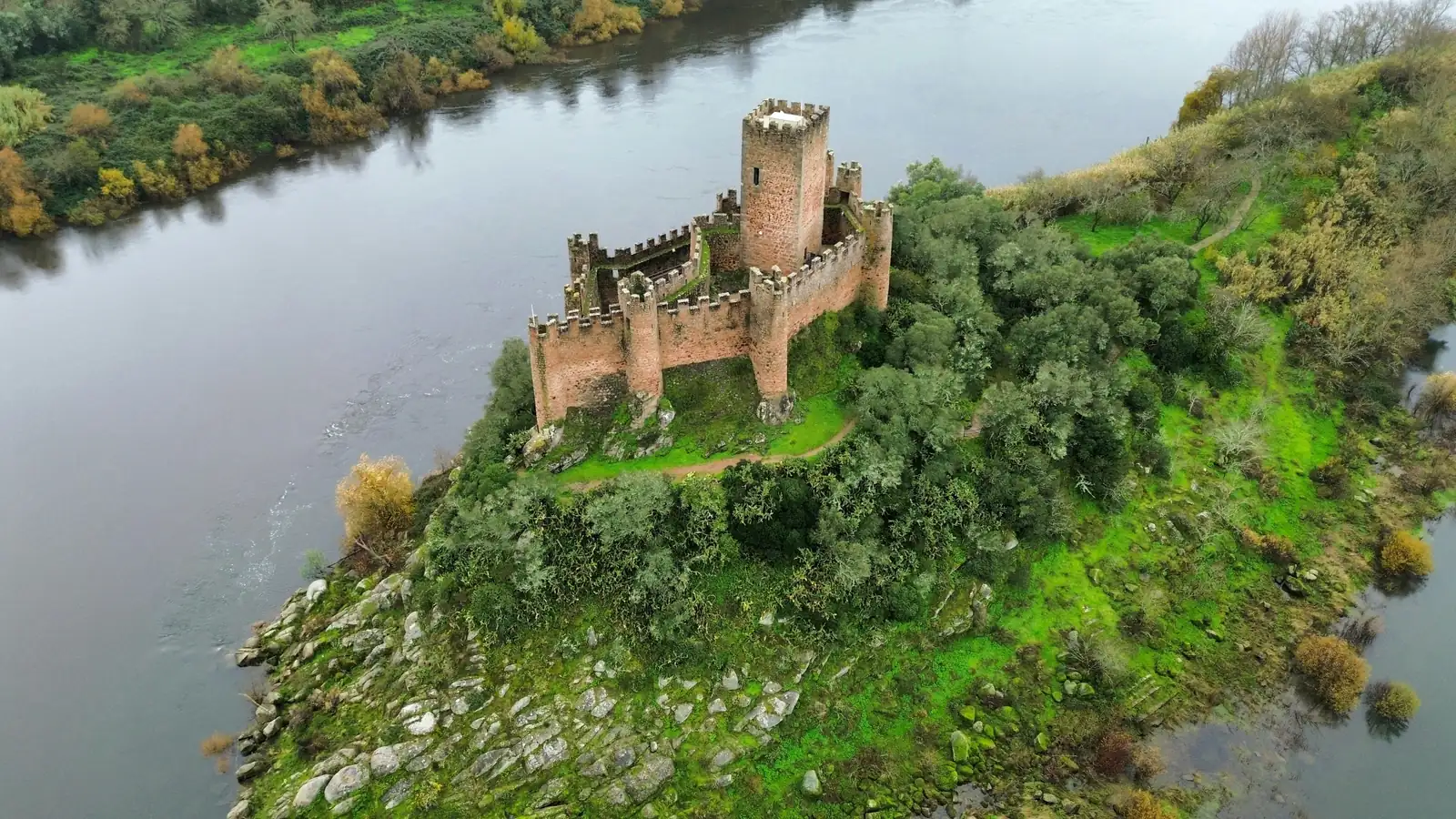
Almourol castle. Photo: Steve Matthews, Unsplash
Templar towns, dammed rivers, schist villages and Gothic monasteries, a couple of hours from the coast you already know.
Most people meet Portugal at its edges. They have walked Lisbon's tiled hills and lost a week to the Algarve cliffs. Then, a few trips in, a quieter question arrives: what is in the middle?
The answer is a country of river valleys and pine ridges, hills that once marked the frontier of a young kingdom. The Knights Templar held this line in the twelfth century, and their castles still watch over it. Towns are small, lunches are long, and nothing needs booking months ahead.
This guide is for travellers who want to slow down here. It is built around Tomar, the old Templar seat, which makes a calm and well-connected base. Island castles, great monasteries and slate villages are mostly within an hour.
Tomar was founded in 1160 by Gualdim Pais, Master of the Templars in Portugal, and it has never quite stopped being their town. The castle and convent crown a wooded hill above the Nabão river, with the whitewashed lower town laid out in a neat grid below.
The Convent of Christ, a UNESCO World Heritage Site since 1983, is the reason most people come. Its heart is the Charola, the round Templar church of the late twelfth century, modelled on the Church of the Holy Sepulchre in Jerusalem. After the Templar order was dissolved, its Portuguese knights and property passed to the new Order of Christ, which helped fund the voyages of discovery. That wealth shows in the Manueline nave and its famous Chapter House window, carved between 1510 and 1513 by Diogo de Arruda with ropes, coral and knots.
Give the convent a full morning. It unfolds cloister by cloister, and the best of it is found in corners, not headlines.
Hours change between summer and winter and the convent closes on a few public holidays, so check the official timetable before you travel. Back in town, look for the medieval synagogue, one of the oldest surviving in Portugal, and the Mata dos Sete Montes, the old convent woodland. Just outside town, the Pegões aqueduct, built to carry water to the convent, strides across a valley on stacked arches.
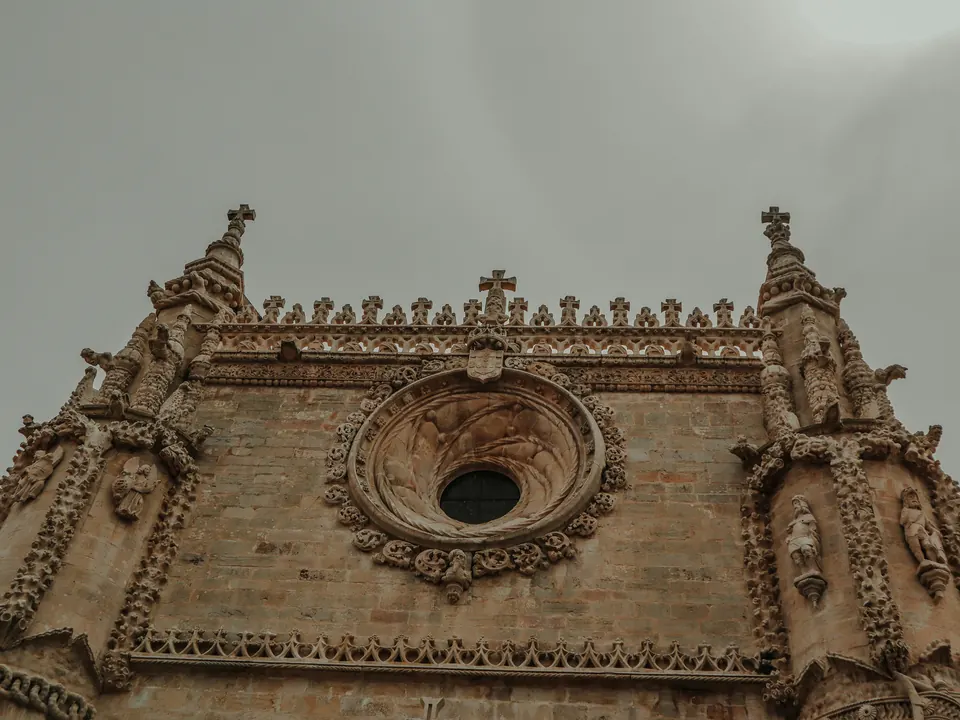 Tomar
TomarTomar's great festival is one of the most striking in Portugal, and it is not annual. It is held roughly every four years in early July, and the town decides by popular vote whether each edition will go ahead. The last was in 2023.
The centrepiece is a procession of hundreds of young women in white, each carrying on her head a tabuleiro: a tall column of loaves threaded on canes, decorated with paper flowers and topped with a crown and a dove or cross. By tradition the tray should be about as tall as the woman carrying it. The festival has roots in the medieval cult of the Holy Spirit and ends with bread and meat being shared out, a reminder that it began as a feast of charity.
The 2027 festival is scheduled for 3 to 12 July 2027, with the Grand Procession of the Trays on Sunday 11 July. Accommodation in and around Tomar fills early for festival years, so book well ahead or stay in a nearby town and come in by train.
East of Tomar, the Zêzere river was dammed in the mid twentieth century to create the Castelo de Bode reservoir, a long, winding lake and one of the main sources of Lisbon's drinking water. Along its edges are river beaches, or praias fluviais, with jetties, lawns and simple cafés: Aldeia do Mato, Castanheira (sometimes called Lago Azul), Alqueidão and Dornes are good names to start with. Dornes, on a narrow peninsula with a pentagonal tower said to have Templar origins, is especially lovely. Facilities and summer supervision vary, so swim only where bathing is marked as allowed.
Downstream, where the Zêzere meets the Tagus, a small castle stands on a rocky island in the middle of the river. Almourol was rebuilt by the Templars under Gualdim Pais in the twelfth century. You reach it by a short boat crossing from the pier on the riverbank. Crossings can be suspended when the river runs high, so it is worth checking on the day.
Close by, the white village of Constância climbs the hill at the confluence of the two rivers. Tradition holds that the poet Luís de Camões lived here for a time, and a garden of plants mentioned in his verse keeps the story alive.
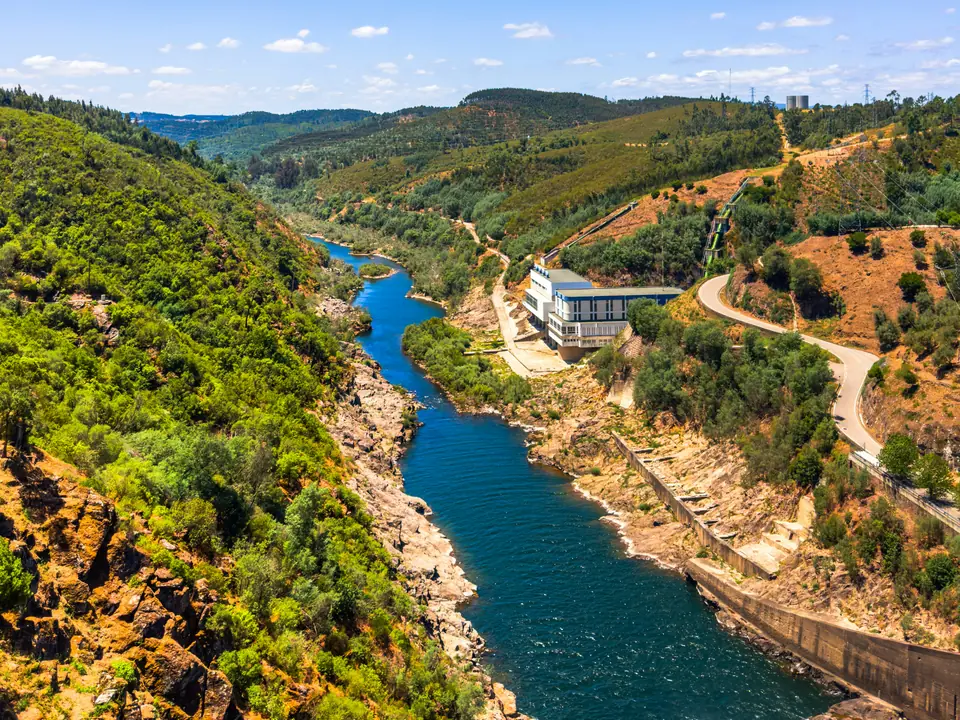 Near Tomar
North of Tomar the land lifts into the Serra da Lousã, a range of chestnut and oak woods, fast streams and steep slopes. Hidden in its folds are the Aldeias do Xisto, villages built from the dark local schist. Many were almost abandoned; several have since been carefully restored, some as places to stay.
Talasnal is the best known, with stone lanes and slate roofs stacked down the hillside. Casal Novo and Chiqueiro are close neighbours, and a marked footpath links Talasnal and Casal Novo in a short, steep loop that makes a perfect half day. Further along the range, Candal sits beside the mountain road, and another marked trail links it with Cerdeira. Wear proper shoes: the paths are rocky.
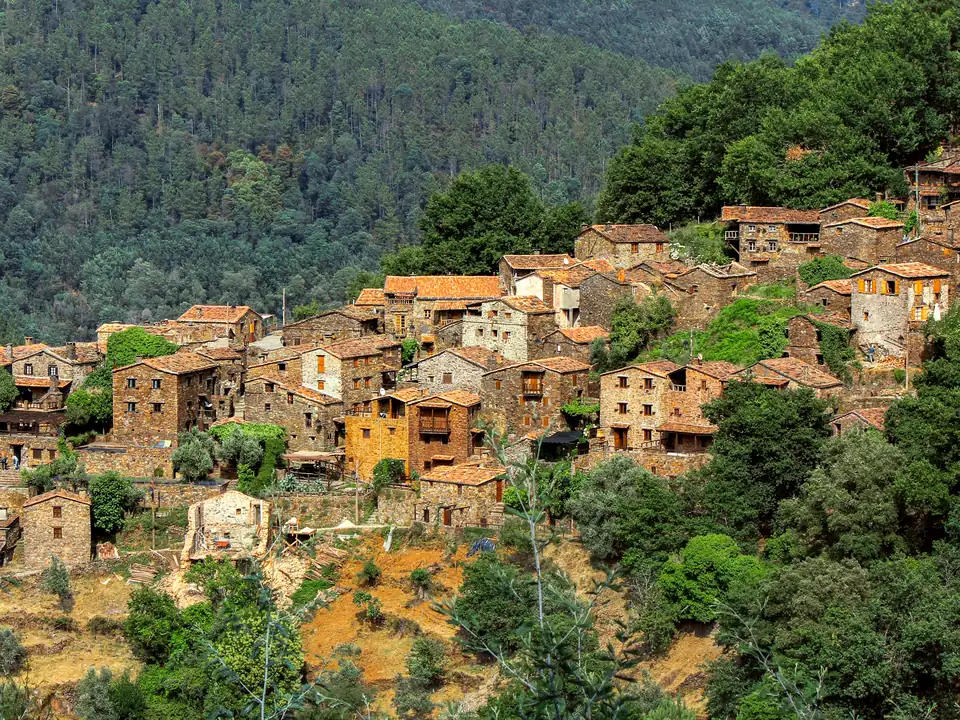 Serra da Lousã
Tomar sits close to some of the most important buildings in Portugal. All four of these are comfortable day trips by car, and Coimbra is easy by train too.
The old university town on the Mondego, part of a UNESCO site since 2013. Climb to the university for the Baroque Joanina library.
One of the great Catholic shrines of the world, built where three shepherd children reported apparitions in 1917. Busiest around 13 May and 13 October.
A Gothic monastery raised in thanks for victory at Aljubarrota in 1385. Do not miss the Unfinished Chapels, open to the sky and extraordinarily carved.
A vast, austere Cistercian abbey holding the carved tombs of King Pedro I and Inês de Castro, the tragic lovers of Portuguese history.
Tomar is one of the easiest inland towns to reach without a car. The station is at the end of a short branch line, a few minutes' walk from the centre.
| From | Train | Car |
|---|---|---|
| Lisbon | Direct regional train from Santa Apolónia, roughly hourly, around 2 hours. No seat reservations. | About 140 km, around 1 hour 30 minutes by motorway. |
| Porto | No direct train. Change at Entroncamento; about 3 to 3.5 hours in total. | About 2 hours by motorway. |
Always check the current timetable with the national rail operator, Comboios de Portugal, before you travel. For the reservoir, the hills and the monasteries, hire a car for part of your stay: buses are infrequent.
Inland, summers are hotter and winters cooler than on the coast.
March to May is the sweet spot for walking. Hills are green, wildflowers are out and the monuments are quiet.
Hot, often very hot, which is exactly when the river beaches earn their place. Sightsee early, swim in the afternoon, and plan around the Tabuleiros in festival years.
Warm days, softer light and the harvest. Chestnuts appear in the hills in October and November.
Quiet, cheaper and occasionally wet, with cold nights in the serra. Good for monasteries and long lunches by a fire.
Tomar has its own convent sweets. The most unusual is Fatias de Tomar: nothing but egg yolks, beaten for a long time, cooked in a water bath in a special double pan, then sliced and soaked in syrup. Look out too for Beija-me Depressa, whose name means "kiss me quickly", a small egg and sugar sweet made by one of the town's long-established pastry shops.
Beyond sweets, this is a region of river fish, roast kid and hearty stews. In the hills around Lousã and Coimbra, try chanfana, goat slow-cooked in red wine in a clay pot. North of Coimbra, the roadside restaurants of Mealhada are famous for suckling pig. Pair it with a local red and plan nothing ambitious for the afternoon.
This route uses Tomar as a base for four nights and ends in Coimbra, with rail connections onward to Porto or back to Lisbon. A car is useful from day three.
Morning train from Lisbon. Walk the lower town and the Nabão, then climb the Mata dos Sete Montes at dusk.
Convent in the morning, synagogue and Pegões aqueduct after lunch, Fatias de Tomar to finish.
Cross to Almourol in the morning, lunch by the river in Constância, and spend the late afternoon at a Castelo de Bode river beach.
A brief stop at Fátima, then unhurried hours at Batalha and Alcobaça.
Walk the Talasnal and Casal Novo loop in the cool of the morning, then drive down to Coimbra for an evening in the old town before moving on.
Direct regional trains run from Lisbon Santa Apolónia to Tomar roughly every hour and take around two hours. There are no seat reservations, so you can buy a ticket at the station. By car the drive is about 140 km and takes around an hour and a half on the motorway.
The Festa dos Tabuleiros is not annual. It is held roughly every four years, in early July. The last edition was in 2023 and the next is scheduled for 3 to 12 July 2027, with the Grand Procession of the Trays on Sunday 11 July 2027.
Not for Tomar itself, which is easy to reach and explore by train and on foot. For the river beaches, the schist villages and the monasteries of Batalha and Alcobaça, a car makes things far easier.
Two days covers Tomar and the Convent of Christ properly. Five days lets you add Almourol, a river beach, the monasteries of Batalha and Alcobaça, and a walk in the schist villages without rushing.
Yes, at its designated river beaches (praias fluviais), such as Aldeia do Mato, Alqueidão or Castanheira. Facilities and summer supervision vary from beach to beach, so check what is in place locally and swim only where bathing is permitted.